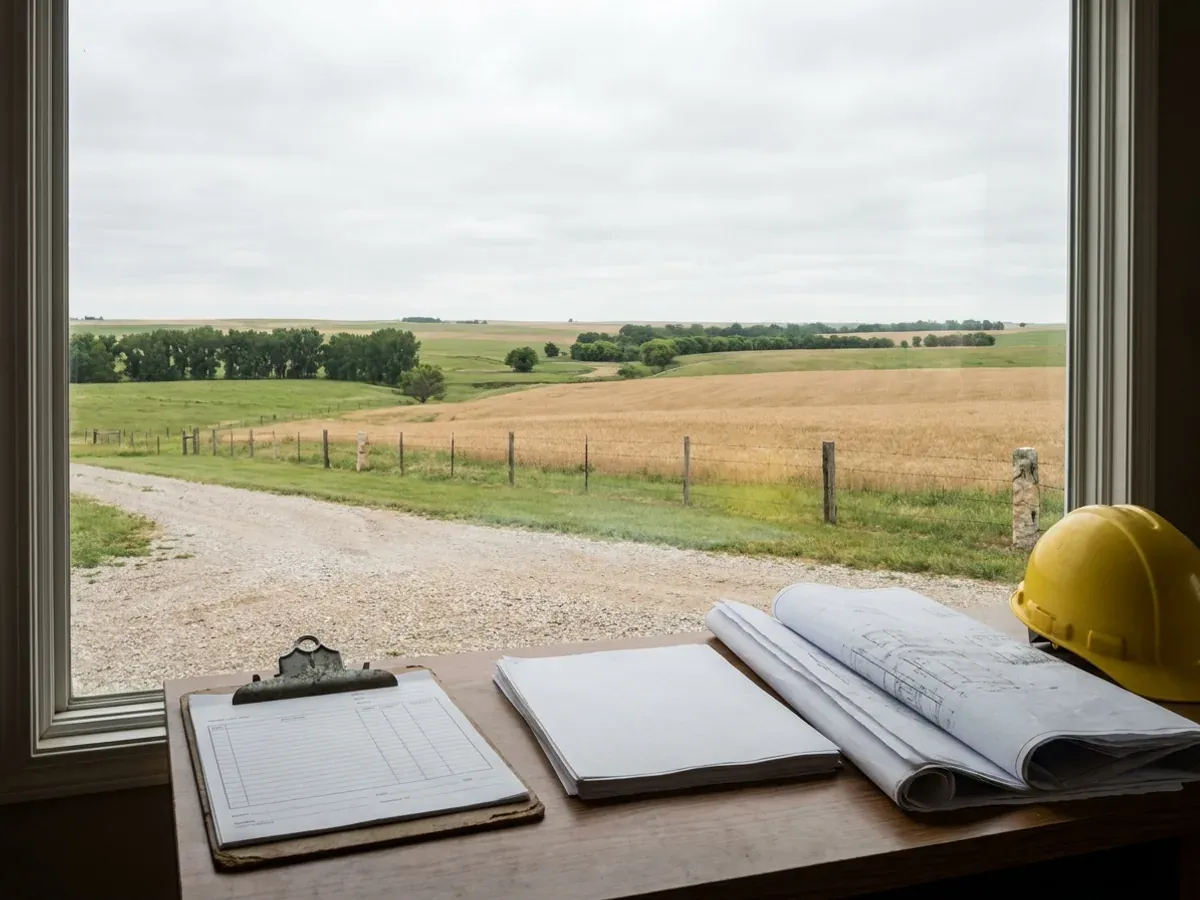
Barndominium Zoning and Permits in Kansas
Kansas has no statewide residential building code. Cities and counties adopt their own, some rural counties issue no residential building permit at all, and land just outside a city can fall under that city's code. So the first permitting question for a barndominium in Kansas is not what the state requires — it is who has jurisdiction over your parcel. We find that out, then handle the approvals that apply: zoning, the building permit where there is one, the septic permit under the county sanitary code or the state minimum standards, the road entrance, and any agricultural-exemption determination.
Permitting & Approvals: how the work runs
Four stages, in this order. The sequence matters more than it looks: settling who has jurisdiction, the septic answer and any permits before anything is fabricated is what keeps a Kansas build from stalling.
Find who has jurisdiction
Inside a city limit, the city's zoning and building code apply. Just outside one, a city may adopt and enforce building codes with its subdivision or zoning regulations. Out in the county, some counties have adopted a building code — Johnson County applies the 2018 international codes in its unincorporated area — and others issue no residential building permit. We establish which applies to your parcel before any design money is spent.
Zoning and the agricultural question
We check the zoning district, setbacks and any minimum lot rules, and whether a house is allowed on the parcel as zoned. If you farm the land and the home is part of that operation, the agricultural-purposes exemption may apply; many counties ask for an exemption determination before you build. A rural home that is not part of a farming operation is zoned like any other house.
Septic, well and road entrance
The septic system is permitted under the county sanitary code or, where a county has none, under KDHE's minimum standards; KDHE advises contacting the local authority before any money is spent on septic design. A licensed water well contractor drills any new well and files the state well record. The county or township that maintains the road approves the entrance.
Building permit and inspections
Where a building code applies, we assemble the submittal: where the building sits on the parcel, floor plans, the structural drawings from the kit manufacturer or a Kansas-licensed professional engineer, and the energy details the jurisdiction asks for. Kansas law bars a building official from accepting technical submissions unless they are sealed or the applicant certifies a specific exemption, so we confirm which the office expects. Then we schedule the inspections through to occupancy.
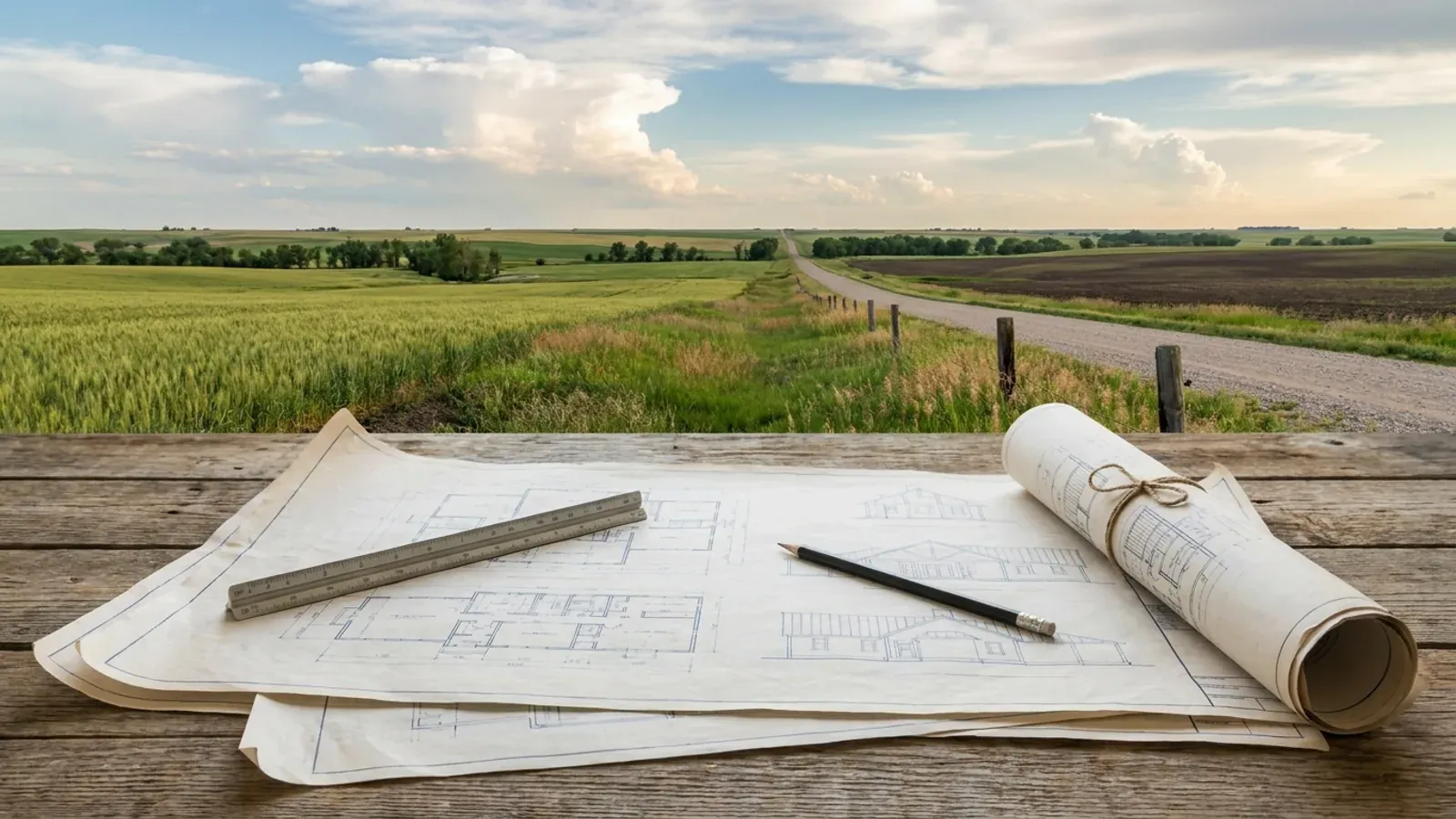
In Kansas the permit question is not what the state requires — it is who has jurisdiction over your land
The Kansas Corporation Commission puts it plainly: because Kansas is a home rule state, adopting and enforcing building codes lies with local jurisdictions. The state's own energy code covers only commercial and industrial buildings. For a new home, the one statewide energy rule is a disclosure: whoever builds or sells a never-occupied new home gives the buyer an energy-efficiency form. Everything else — zoning, building permits, septic — depends on the city or county over your parcel, which is why we start there.
Where we deliver permitting & approvals
In Kansas the line that matters can be a city limit or a county line. Inside a city you usually have city zoning and a city building department; just outside one, a city can extend its building code with its subdivision or zoning regulations; out in the county, some counties enforce an adopted code and some issue no residential building permit at all. Cross one of those lines and what changes is whether the build is inspected, who reviews the drawings, how the land is zoned and whose snow, wind and frost values the drawings answer to. The septic permit, under the county sanitary code or the state minimum standards, goes with you everywhere.
Barndominium builders across Kansas.
Every city and county we build in has its own answer on permits, septic and design values. The service area pages set out what each one publishes.
What actually decides the price
Square footage is the number everyone leads with, and it is rarely the one that moves a barndominium budget. These four do.
-
Which jurisdiction you are in
A city with plan review, a county with an adopted code, or a county with only zoning and a sanitary code — each has a different submittal, a different fee schedule and a different timeline. The same building can cost noticeably different amounts to permit a few miles apart.
-
The septic path
Soil that passes for a conventional lateral field is the simple case. Slow or shallow soil can mean an alternative system, a separate design and a longer review. KDHE's minimum standards need four feet of aerated soil below the absorption field.
-
Structural documentation
Where a building official wants sealed drawings, a Kansas-licensed professional engineer's seal is part of the cost. Kit manufacturers often supply sealed frame drawings; foundations and site-specific details may need separate work.
-
Road and access conditions
A new entrance, a culvert, or a road the county will not permit a house on until it is improved can add cost and time. Franklin County, for example, restricts building permits for non-agricultural buildings reached from a minimum maintenance road unless the owner agrees to upgrade the road.
Permitting & Approvals in Kansas: common questions
8 questions we get asked most often about building in Kansas. If yours is not on the list, ask it directly.
Can you build a barndominium in Kansas?
Does Kansas require a building permit for a barndominium?
Is a barndominium on farmland exempt from zoning?
Who permits the septic system?
Do I need a permit to drill a well?
Do I need an architect or engineer for the permit?
What if my land is just outside a city?
How long does permitting take?
Sources
- Kansas Building Energy Codes (home-rule adoption; energy disclosure) — Kansas Corporation Commission
- K.S.A. 66-1227, energy standard for commercial and industrial structures — Kansas Office of Revisor of Statutes
- K.S.A. 66-1228, energy-efficiency disclosure on new residences — Kansas Office of Revisor of Statutes
- K.S.A. 12-751, city building codes outside city limits — Kansas Office of Revisor of Statutes
- K.S.A. 19-2921, county zoning and agricultural land — Kansas Office of Revisor of Statutes
- Attorney General Opinion 2018-4 (agricultural-purposes exemption) — Kansas Attorney General, via Washburn University School of Law
- Attorney General Opinion 2016-10 (agricultural buildings and county codes) — Kansas Attorney General, via Washburn University School of Law
- Bulletin 4-2, Minimum Standards for Design and Construction of Onsite Wastewater Systems — Kansas Department of Health and Environment
- K.S.A. 82a-705, appropriation permits and domestic use — Kansas Office of Revisor of Statutes
- Water Well Program — Kansas Department of Health and Environment
- K.S.A. 74-7031, architecture licensure exemptions — Kansas Office of Revisor of Statutes
- K.S.A. 74-7038, technical submissions to building officials — Kansas Office of Revisor of Statutes
- Code of Regulations for Buildings and Construction — Johnson County, Kansas
- Building Department Requirements and Permits — Franklin County, Kansas
Keep reading
The pages that answer the next question this one raises.
Are Barndominiums Legal in Kansas?
No statewide residential code, local adoption, and where the agricultural exemption stops.
Read itHow Long Does It Take?
How the permit path you are on changes the schedule.
Read itWhere We Build
Which authority actually reviews your parcel, city by city and county by county.
Read itReady to put permitting & approvals against a real plan? Start there and the rest follows.
Tell us about the land
Tell us where the parcel is and what you want on it, and we will come back with who has jurisdiction, what the land needs before it can be built on, and a realistic budget range. Starting the survey costs nothing.